


Professors across the university are incorporating multifaith understanding into their courses, supporting the university’s Multifaith Strategic Plan, and helping to prepare students to interact, work with and serve those from a variety of backgrounds.
At ÂÒÂ×ÊÓƵ, faculty say preparing students means helping them understand the people they will interact with throughout their lives, and that includes the influence of faith and religious identity.
That commitment to multifaith understanding is a primary goal of the university’s Multifaith Strategic Plan, which strives to “support opportunities for multifaith learning and engagement for all members of the academic community.�
“ÂÒÂ×ÊÓƵ’s Multifaith Strategic Plan is a promise to our students, faculty, staff and the wider community that we will take them seriously as whole, complex people,â€� said Brian Pennington, director of the Center for the Study of Religion, Culture, and Society.
The multifaith experience
The Multifaith Scholars Program is a two-year program, founded in 2016, that emphasizes interdisciplinary learning as student scholars undertake original research projects and study in global contexts connected with religious diversity and multireligious societies.
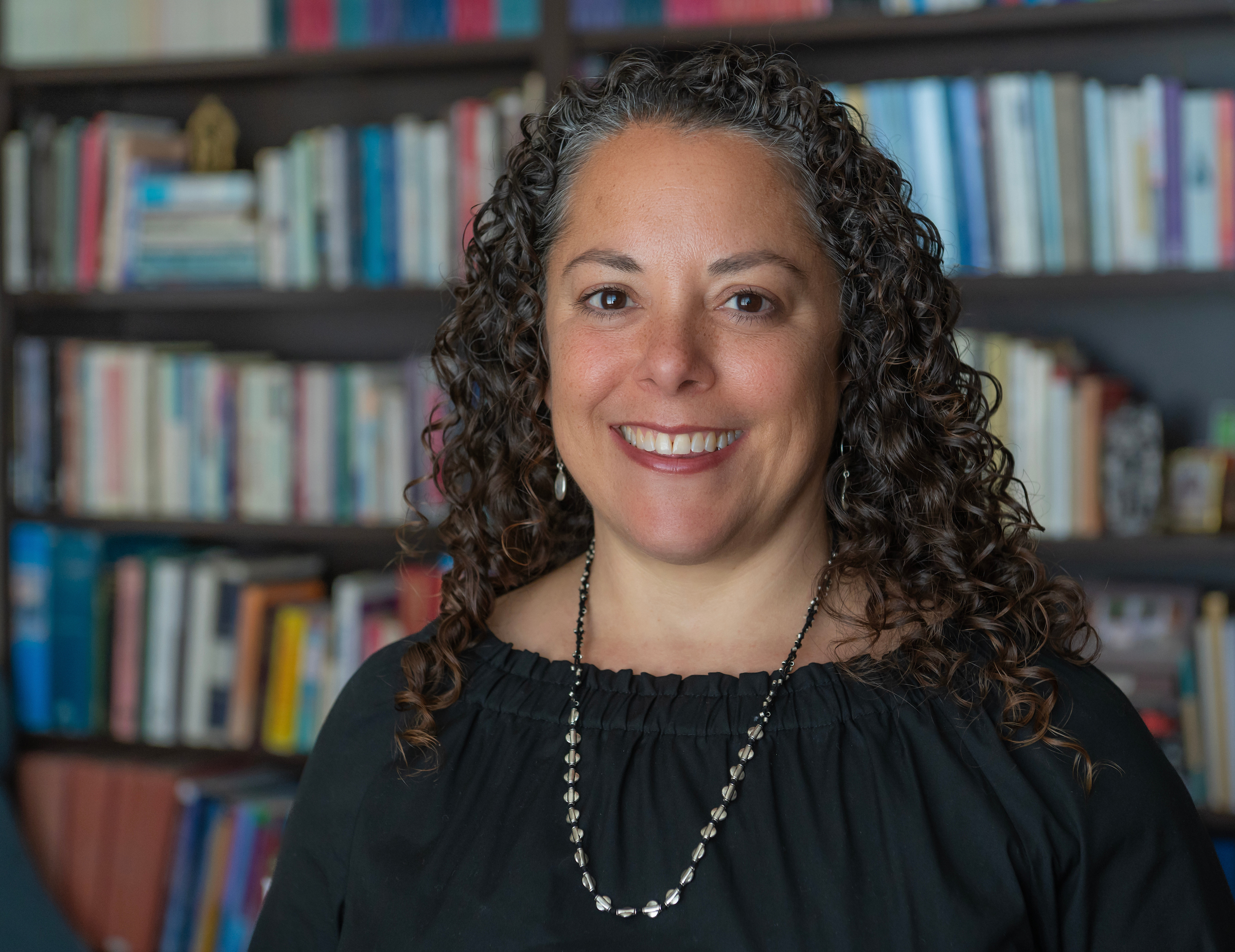
“Our work is richer when we have students bringing questions from their own disciplines,� said Amy Allocco, director of the program and professor of religious studies. “It is a sign of a vibrant campus ecosystem when not only students but also their mentors can see their interests and expertise  intersect with questions of interreligious contact, religion and society.�
Allocco says that the breadth of disciplines represented by students and mentors participating in the program has widened each year. The current cohort includes students with diverse majors such as psychology, theatrical design, history, economics consulting, political science, religious studies, and international and global Studies. Owen Hayes ’26, a history major with minors in political science and religious studies, is a 2024-2026 Multifaith Scholar studying the historical and contemporary relationship between Christian missionaries and Indigenous Australians.
“I’ve always been interested in understanding the interreligious encounters of the world, like global Christianity and understanding how different communities can come together and understand such an important religious concept in such different, varying ways, but still have that belief of Christianity,â€� Hayes said.
The interreligious studies minor also allows students to analyze the historical and contemporary encounters between and interactions among religious communities and traditions.
“ÂÒÂ×ÊÓƵ has done incredible work in enfranchising multifaith as an academic as well as a student affairs initiative and aligning and even blending those areas in meaningful ways that enhance the student experience,â€� Allocco said.
Multifaith in the classroom (and clinic)
In the Department of Nursing, faculty don’t just train future healthcare professionals on specific medical assessments but, as Assistant Professor of Nursing Lori Hubbard says, they “prepare students for the diversity in the populations they will serve,� including religion.
“Diversity in people is understanding their religious background, because religious practices are often infused into health practices and health beliefs,� said Hubbard, who teaches the Healthcare Relationships course, which focuses on understanding diverse backgrounds in healthcare.
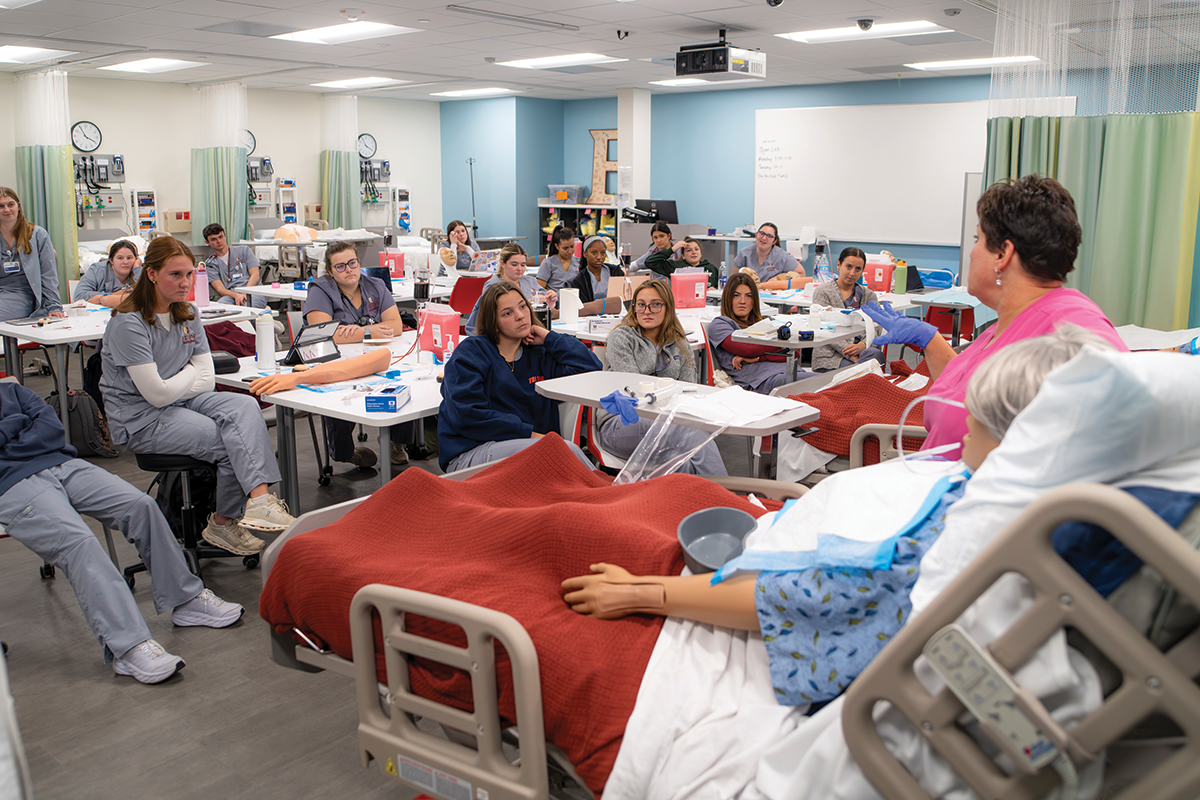
The course is just one component of the Department of Nursing’s commitment to equitable healthcare teaching, which is incorporated throughout the curriculum.
“From birth to death and everywhere in between, the people that are going to be important in a person’s wellness or their healing may come from their church body,â€� said Hubbard, who says they also want students to understand the role of the chaplain in a hospital setting. “People may have members of a church congregation bring them meals, they may have pastors and friends visit to pray with them. A person’s support network is a social determinant of health.â€�
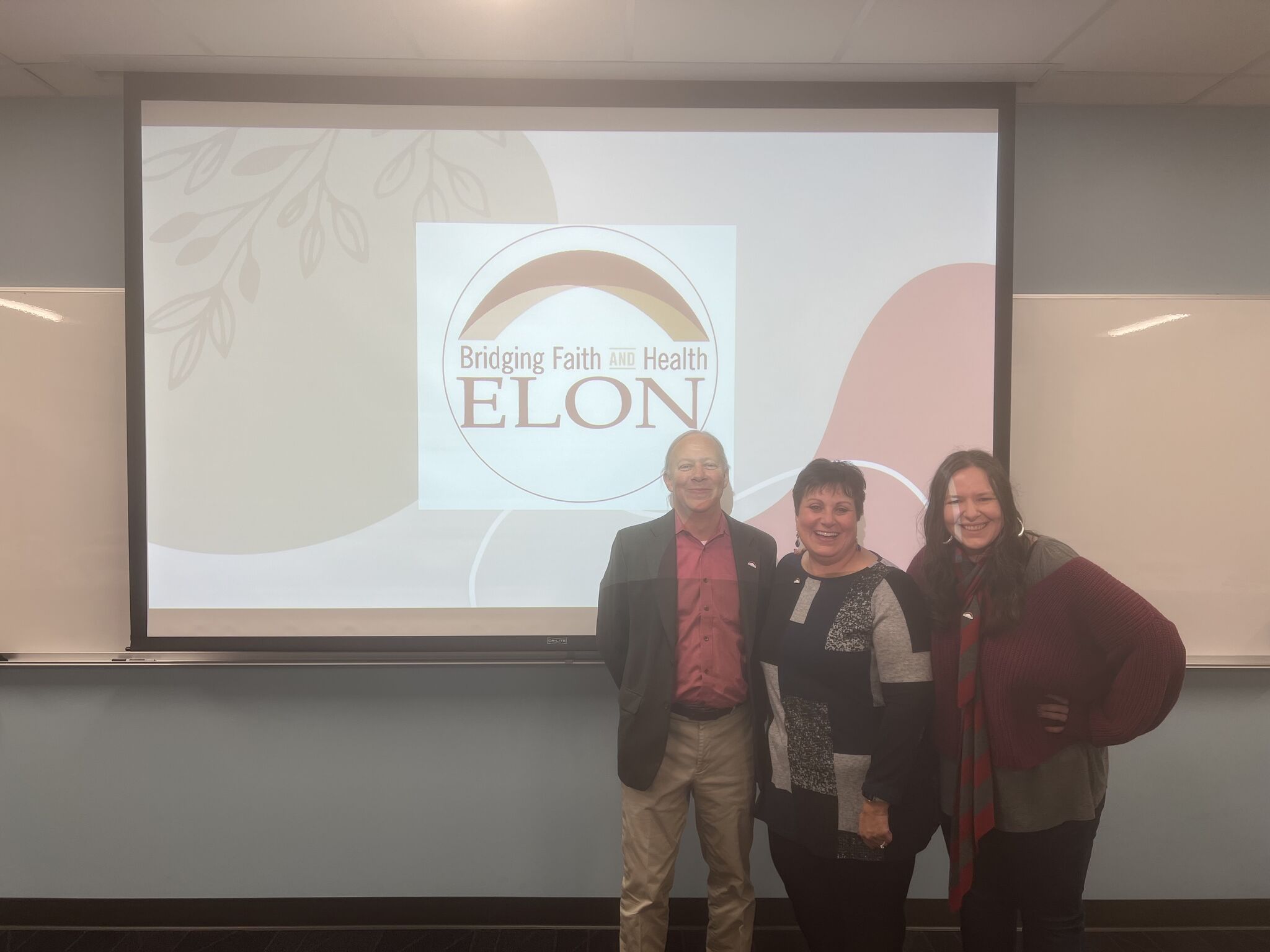
In December 2025, a faculty team consisting of Pennington, Jeanmarie Koonts, assistant professor of nursing; Molly Green, assistant professor of public health, and Helen Orr, assistant professor of religious studies, was awarded a $60,000 Faith & Health Campus Grant from Interfaith America to promote awareness of how religious diversity impacts healthcare space and medical decision-making.
Engineering a multifaith course
Along with nursing, several ÂÒÂ×ÊÓƵ courses across disciplines integrate multifaith understanding. Orr is co-teaching a new course, Engineering A Better World, with Professor of Engineering Sirena Hargrove-Leak on ethical practices in engineering.
“Religion is an important category for a lot of people, and it informs not only beliefs, but also everyday practice and ritual, including when people fast, how they dress and how they interact in professional spaces,� Orr said. “One of our sessions in the course focuses on the value of multi-faith spaces in professional working environments. Those spaces can be beneficial both for religious people and non-religious people, while also encouraging us to think about how environments themselves can be designed to be more inclusive.�
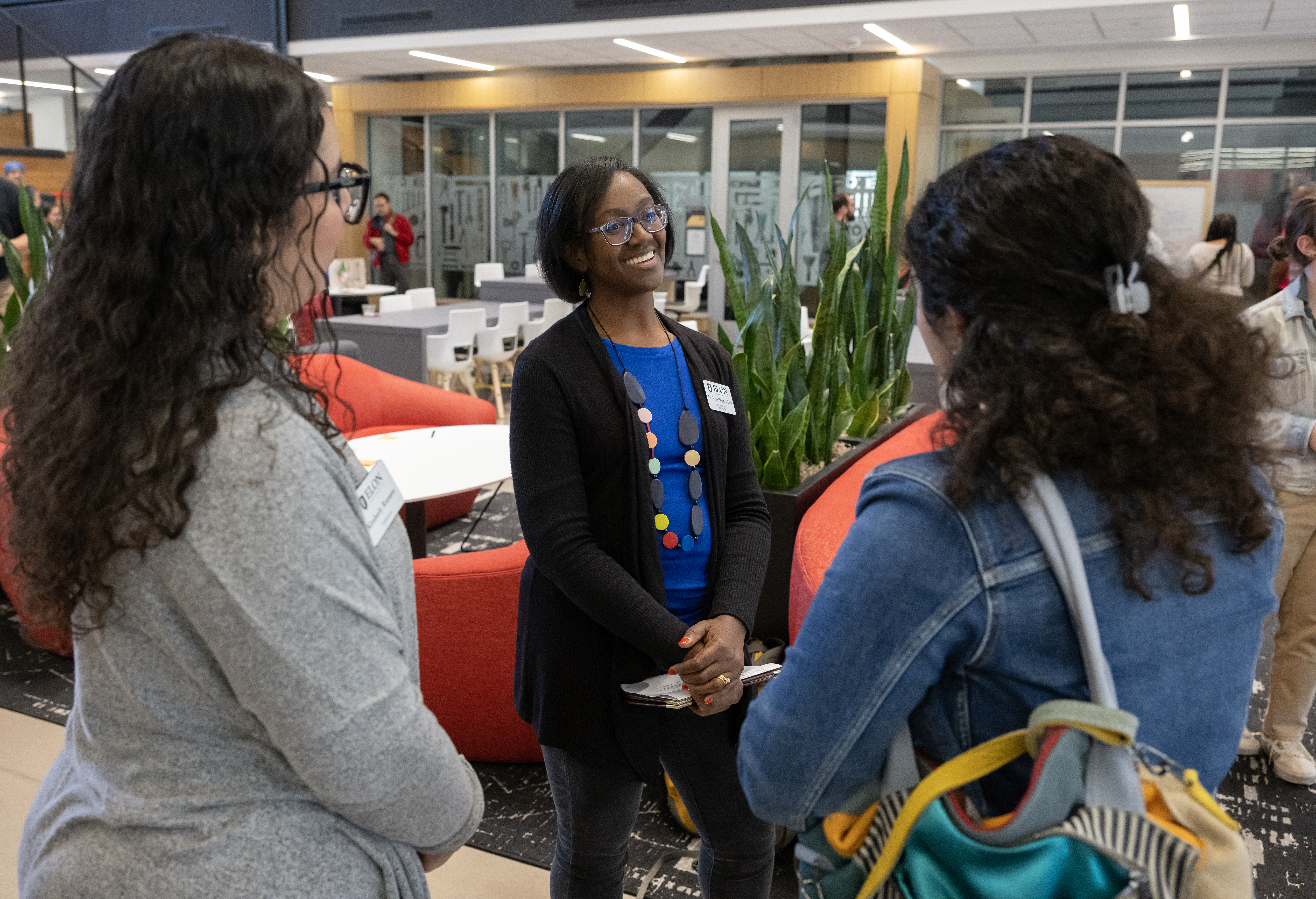
Hargrove Leak says the engineering curriculum requires an ethics course and, historically, faculty advised students to choose an ethics course through the Core Curriculum. The downside, she says, is they may not connect what they’re learning to engineering practice. This new course, she says, connects the dots directly.
“The work of engineering professionals has the potential to impact people directly; therefore, ethical practice is critically important,� said Hargrove-Leak.
Communicating religion
While Orr and Hargrove-Leak’s course is new this semester, Professor of Journalism Anthony Hatcher has been studying and teaching the intersection of religion and media for more than 20 years. His course Religion and Media analyzes how the two interact through media coverage of religious issues and themes, religion’s use of television and the Internet and media portrayals of religious people and traditions.
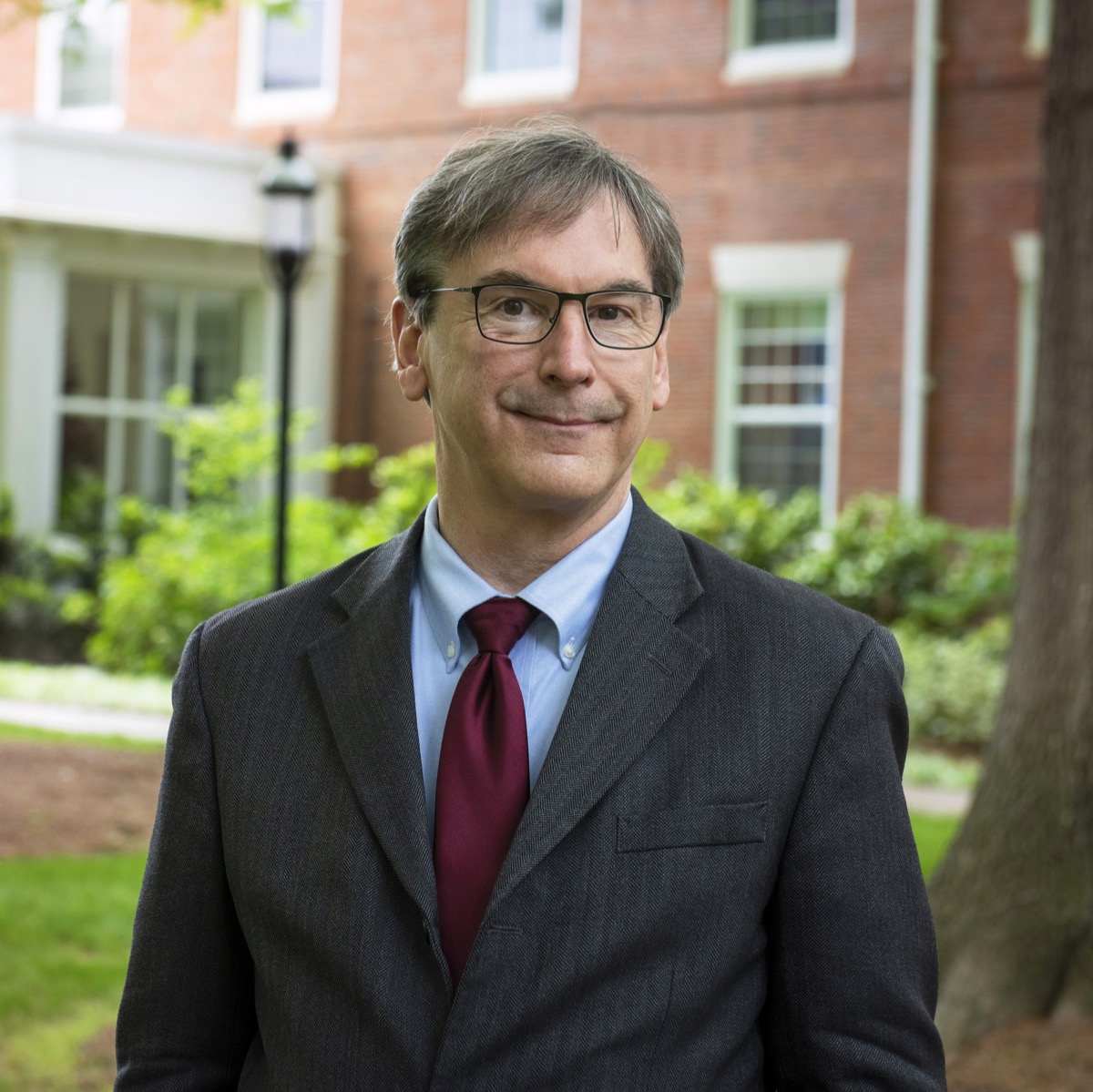
Hatcher began teaching the course in 2003, coming from a longtime interest in the intersection of the two subjects.
“It has always sparked my interest how religion intersects not only with a news item, but how it intersects with popular culture,� he said. “I tell my students, ‘If there is a secular entity of some sort, there is a religious corollary to it.’�
Finding religious connections in culture is endless for Hatcher, who says he never runs out of material for the course. For one assignment, students must attend a house of worship outside of their own faith and do a research project on the experience. The projects range from more well-known religious practices to lesser-known, like a student who visited a coven of witches in Hillsborough, North Carolina
“I make it clear: this is not a religion class. I’m not here to teach you about the scripture,â€� Hatcher said. “When they go (to these houses of worship), it’s not just a religious thing. I say, ‘What kind of media did they use? Do they have cameras? Do they have a single microphone? Do they use screens and slides? Is it a majestic organ? What are you seeing there? Did they give you a paper program? Everything that’s media.’ It gets them thinking about all the mediated ways that they experience religion.â€�
The course is open to all majors, and Hatcher says it can be relevant for all professions.
“The subject matter is so important,â€� Hatcher said. “It’s like how study abroad is mind-broadening. I think understanding where somebody else comes from, especially if faith is a big part of who they are, is a big deal.â€�
And for Pennington, ÂÒÂ×ÊÓƵ’s approach to multifaith learning is an example for others to follow.
“We live in a moment where we can clearly see that the faith commitments and religious practices interact with our global politics, our legal systems, our media environments, and our healthcare systems,â€� said Pennington. “By attending to multifaith education across academic departments and programs, ÂÒÂ×ÊÓƵ is leading the way in preparing its students for a rapidly evolving world.â€�
This story is part of a series of stories focusing on ÂÒÂ×ÊÓƵ’s Multifaith Strategic Plan.Â
-
Brian Pennington
Director of the Center for the Study of Religion, Culture, and Society and Professor of Religious Studies
-
Helen Orr
Assistant Professor of Religious Studies
-
Sirena Hargrove-Leak
Professor of Engineering
-
Lori Hubbard
Assistant Professor of Nursing
-
Amy Allocco
Professor of Religious Studies
-
Jeanmarie Koonts
Assistant Professor of Nursing