


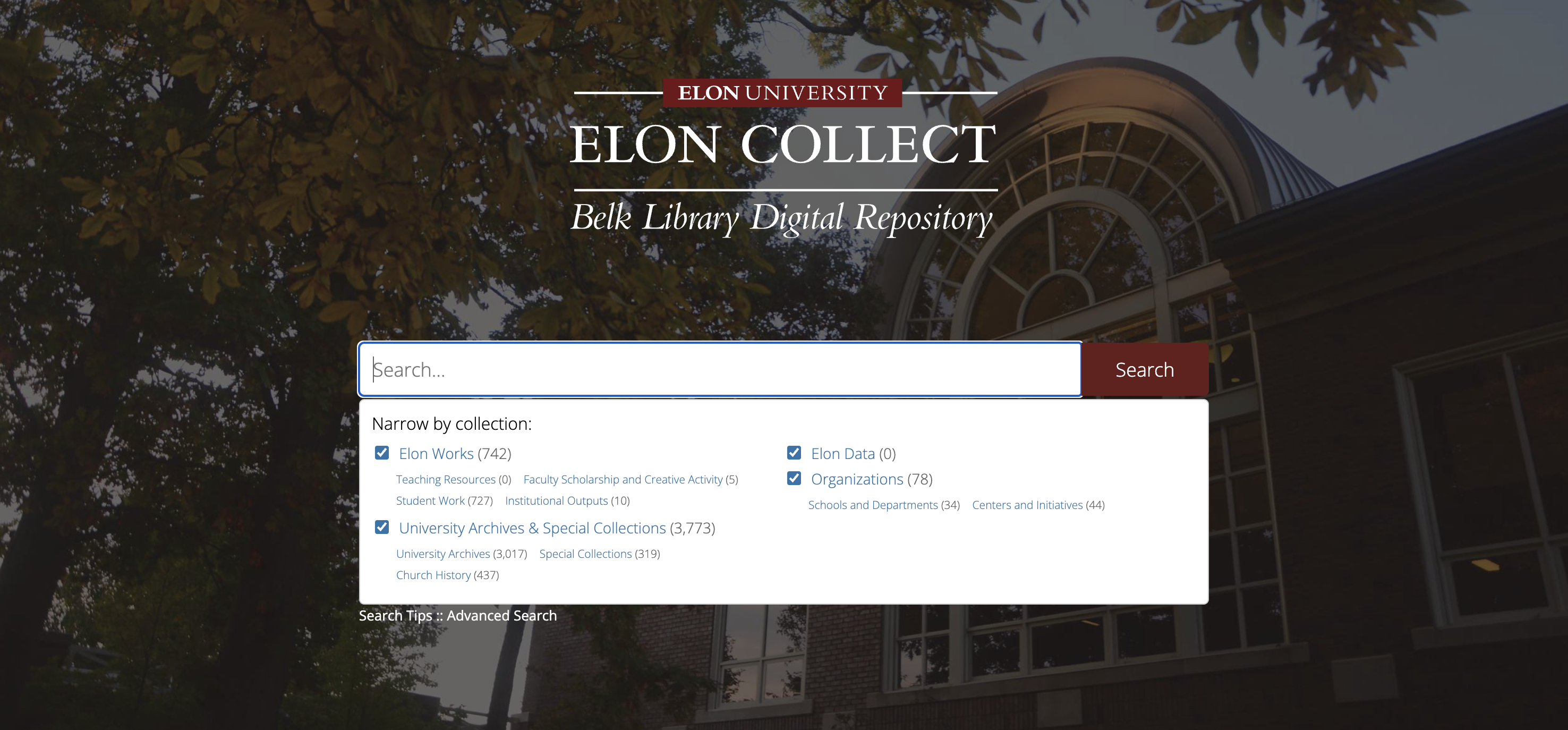
The institutional repository will support a more centralized and accessible approach to preserving the university’s history, scholarship and teaching output. The system, ÂÒÂ×ÊÓƵ Collect, officially launched on Aug. 14.
Belk Library has launched the university’s first institutional repository, . ÂÒÂ×ÊÓƵ Collect is a digital collections hub, showcasing items related to ÂÒÂ×ÊÓƵ’s history and the current data, scholarship, and teaching output of the university. The system supports long-term public access to support the rich intellectual community and passion for discovery, providing increased visibility and preservation for current and historic works. As a centralized, multidisciplinary repository, ÂÒÂ×ÊÓƵ Collect welcomes submissions of the scholarship, creative and professional works, data, and teaching materials created by ÂÒÂ×ÊÓƵ faculty, staff, and students.
“We’re excited to launch ÂÒÂ×ÊÓƵ Collect because it gives us a shared digital home for the intellectual and cultural life of the university,â€� states Dean & University Librarian of Carol Grotnes Belk Library Brian Mathews. “It will preserve important pieces of ÂÒÂ×ÊÓƵ’s institutional history while also providing lasting access to faculty and student scholarship, creative work, research, reports, teaching materials and other significant contributions. In that sense, it is both an archive of where ÂÒÂ×ÊÓƵ has been and an infrastructure for where we are going.â€�
What is ÂÒÂ×ÊÓƵ Collect?
ÂÒÂ×ÊÓƵ Collect is an institutional repository, which is a digital system that is used to disseminate scholarly works created at a single institution. However, ÂÒÂ×ÊÓƵ Collect’s scope expands more broadly, allowing data and archival materials to stand in conversation with scholarship.
ÂÒÂ×ÊÓƵ Collect is home to three distinct overarching collections: ÂÒÂ×ÊÓƵ Works, ÂÒÂ×ÊÓƵ Data, and University Archives & Special Collections.
- ÂÒÂ×ÊÓƵ Works is a centralized hub to showcase the research, scholarly, creative and teaching-focused work created across campus.
- ÂÒÂ×ÊÓƵ Data is home to data created and collected by students, faculty and staff.
- University Archives & Special Collections is the new location for curated images, documents, and ephemera from ÂÒÂ×ÊÓƵ, church, and local history from Belk Library’s .
Anyone currently associated with ÂÒÂ×ÊÓƵ is eligible to deposit works into the ÂÒÂ×ÊÓƵ Works and ÂÒÂ×ÊÓƵ Data collections to enhance reach and visibility, both around campus and worldwide.
ÂÒÂ×ÊÓƵ Collect worked with three campus partners–the , the , and the Digital and Spatial Humanities Consortium–to showcase examples of faculty and staff work and ensure a smooth campus launch on Aug. 14. Additionally, posters from the have been included to provide examples of how student work can be shared.
What are the benefits & features of ÂÒÂ×ÊÓƵ Collect?
“ÂÒÂ×ÊÓƵ Collect will empower faculty, staff, and students to better disseminate and promote their work, exercise their rights as authors, and contribute to conversations in research, creative practice, and teaching and learning,” said Coordinator of Research and Publishing and Associate Librarian Jesse Akman. “Moreover, ÂÒÂ×ÊÓƵ Collect will simplify grant compliance, improve discoverability for ÂÒÂ×ÊÓƵ journals and publications, and strengthen internal communications and institutional memory.â€�
One of the core goals of ÂÒÂ×ÊÓƵ Collect is to provide wider access to works created on ÂÒÂ×ÊÓƵ’s campus. With Google Scholar indexing, any work deposited can be discovered by researchers worldwide. Through Creative Commons license options, ÂÒÂ×ÊÓƵ creators can more precisely describe how others may use their work. However, for those who may not want their work to be available worldwide, ÂÒÂ×ÊÓƵ Collect also provides other access options, including embargos to make public at a later date or internal access to only ÂÒÂ×ÊÓƵ users.
The system can also mint DOIs, or digital object identifiers, to provide a persistent identifier that acts as a stable, permanent link back to the work. DOIs help to standardize citations, especially for users outside of ÂÒÂ×ÊÓƵ.
ÂÒÂ×ÊÓƵ Collect also provides Author Profiles, a centralized portfolio for all works in the repository alongside research interests and external publications. The Author Profiles provide comparative statistics for every work connected to the profile owner, making it even easier to find and share the impact of your work.
“As we enter the final years of Boldly ÂÒÂ×ÊÓƵ and consider what it means to “Rise,” ÂÒÂ×ÊÓƵ Collect will help position the university for a future where our authors’ works are preserved and accessible, their rights are protected, and our campus is more enmeshed in scholarly communications than ever before,â€� said Akman.
What can I submit to ÂÒÂ×ÊÓƵ Collect?
ÂÒÂ×ÊÓƵ Collect accepts a variety of deposits from current faculty, staff and students.
“ÂÒÂ×ÊÓƵ Collect expands beyond the scope of a traditional institutional repository to capture the full breadth of work being created on campus today,â€� said Emma Powell, archivist and assistant librarian and manager of ÂÒÂ×ÊÓƵ Collect. “Historically, the ÂÒÂ×ÊÓƵ Archives and Special Collections has only collected undergraduate honors theses. This is an exciting opportunity to diversify the works we share.â€�
Works that can be deposited include, but are not limited to:
- Campus-based publications—serial outputs created and published by campus centers like journals or podcast series
- Conference-based works—works like posters or presentations created for or presented at a disciplinary conference
- Creative works—outputs from those working/studying in creative fields like artwork, choreography, creative writing, filmmaking and original music compositions
- Data, software and code
- Grey literature—documents created to be shared but not be published through traditional means like reports and white papers
- Open publications—works that have been formally published like book chapters and journal articles, and have Open Access (OA) or self-archiving (Green OA) options
- Student works—works completed solely by students that have original writing or research and should be shared beyond the classroom like theses and capstones or SURF and SURE posters and presentations
- Teaching and learning materials—works created for use in the classroom that may be reused and/or adapted by others, like assignments, lectures or other OERs
“Many of our new areas of collecting reflect the university’s continued growth,� Powell said. “We collect teaching and learning materials to reflect the excellence in teaching from our faculty, and allow for a wide range of student work to showcase our expansive undergraduate research. Even our data and code collection connects to the continued work of Data Nexus.�
Submitting your work to ÂÒÂ×ÊÓƵ Collect only takes three simple steps:
- Find or create a work that you or the university hold copyrights to and wish to share further.
- Go to and navigate to the “Submit� header. Select a submission form and provide basic descriptions (also known as metadata) to make your work more discoverable.
- Submit your form and wait for the repository team to review. Once the team has ensured the work fits into the system scope and has the necessary metadata, your work will be made available in the system.
Questions?
To learn more, join Belk Library on Monday, September 21 at 1 p.m. for the first workshop in our Scholars’ Toolkit series: Showcasing Your Scholarly and Professional Work in ÂÒÂ×ÊÓƵ Collect and ORCiD. .
For further information, visit or email elon-collect@elon.edu.