


ÂÒÂ×ÊÓƵ's Multifaith Strategic Plan emphasizes academic learning opportunities such as those found in the Department of Religious Studies.
One of the central goals of ÂÒÂ×ÊÓƵ’s Multifaith Strategic Plan is to “support opportunities for multifaith learning and engagement for all members of the ÂÒÂ×ÊÓƵ academic community,â€� including through academic opportunities. While many students at ÂÒÂ×ÊÓƵ may take a single course during their time at ÂÒÂ×ÊÓƵ that focuses on the study of religion or spirituality, a select group of students specializes in academic multifaith learning: religious studies majors.
Last month, 11 students graduated from ÂÒÂ×ÊÓƵ with degrees in religious studies, the largest number of Religious Studies majors graduating in a single year since 2012.
“The number of majors in our department has grown substantially over the last several years,â€� said Geoffrey Claussen, professor of religious studies and chair of the Department of Religious Studies. “Students seldom come to ÂÒÂ×ÊÓƵ planning to major in religious studies, but students often take courses during their first year that whet their appetite for further learning. They are able to recognize how the critical study of religion helps them to understand the world, and they appreciate the mentorship and community that our department offers.â€�
Religion is anything
The course that hooked Tracey McCarty ’26 on religious studies was “Religion and American Popular Culture,� taught by Andrew Monteith, and explores how religion can be found in many unexpected places in popular culture and imagined in radically different ways.
“I was taught a very specific concept: religion is anything,â€� McCarty said. “This was a game-changer for me. To understand religion not as a cohesive and strict definition, but as this conceptual ball that can be shaped in any way. Seeing religion as not an institution, but as a thing that a single person can define for themselves, was beautiful.â€�

One of the goals of ÂÒÂ×ÊÓƵ’s Multifaith Strategic Plan is to develop courses that “support student learning about diverse religious, spiritual, and secular traditions and identities.â€� In the Religious Studies department, these include “traditionsâ€� courses that explore how sets of traditions often viewed as static religions are characterized by significant diversity and can be depicted in very different ways.
Tess Trayner ’26 explored the diversity of Buddhisms in “Buddhist Traditions,� taught by Pamela Winfield.
“We traced Buddhism from its founding more than 2,000 years ago through its development across Asia and into the West, and Dr. Winfield refused to let us treat any of it as exotic or static,� Trayner said. “The unit on Orientalism and Buddhism in America helped me better understand the decontextualizing nature of mindfulness apps, yoga studios, and how to approach the version of Buddhism most familiar to American audiences. Learning to see Engaged Buddhism as both an authentic tradition and a phenomenon shaped by Western projection gave me tools I now reach for constantly – tools for noticing whose version of a tradition gets centered, and why.�
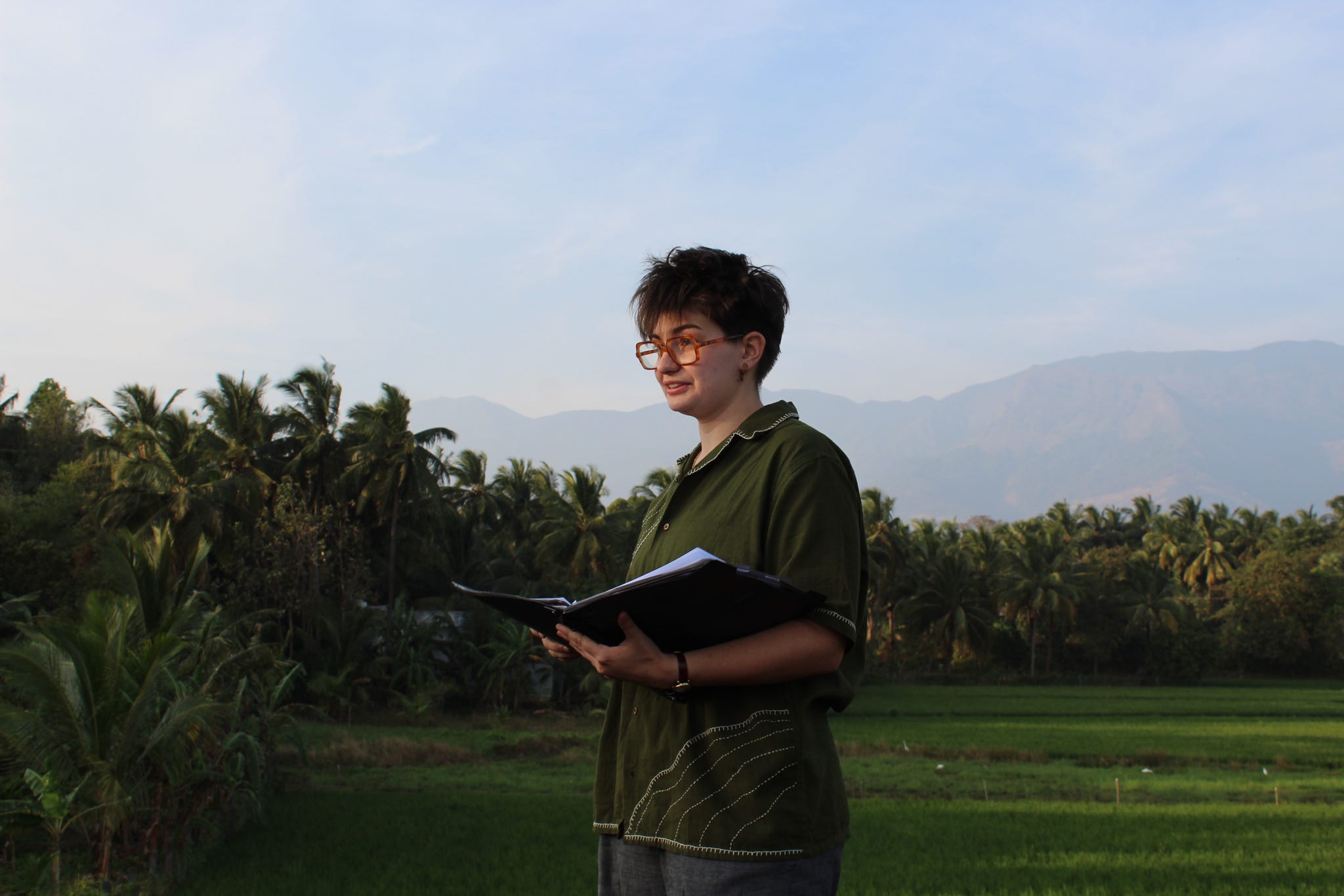
Another Traditions course, “Jewish Traditions,� taught by Claussen, featured opportunities to role-play debates about how Jewish tradition should be understood. In this class, Trayner had the opportunity to step into the shoes of thinkers with whom they sympathized and others whose views they found reprehensible.
“I discovered that wrestling with viewpoints I disagree with sharpens both my disagreement and my empathy,” Trayner said. “It is one thing to read a Jewish thinker. It is another to inhabit them long enough to understand how their historical moment shaped what they could imagine.â€�
Multifaith at home and abroad
ÂÒÂ×ÊÓƵ’s Multifaith Strategic Plan also commits the university to developing “pathways for experiential and engaged multifaith learning,â€� including through study abroad courses that “support engagement with global religious communities.â€�
Trayner had a significant learning experience taking “India’s Identities,â€� a course taught in South India by Amy Allocco and Brian Pennington. The course “deconstructed what I thought I knew about Hinduism, and rebuilt it with a critical emphasis on vernacular practice and the lived religion of regular, everyday people. As such, the class refused the traditional classroom format. Instead, Dr. Allocco’s deep roots of connection in Chennai meant we sat in living rooms with the most incredible people.â€�
Students have also been equipped by their Religious Studies coursework to engage with communities closer to home. Alyssa Carney ’26, for example, volunteered at the Burlington Masjid, teaching English to newcomers. Experiences of working with displaced people led her to propose a new unit for her “Engaging Islam� course, taught by Ariela Marcus-Sells.
What makes this course unique is its ‘build your own path’ structure, which allows students to shape the direction of their learning based on their interests and experiences, Carney said.
“For me, it created an opportunity to connect my volunteer work with my academic inquiry. As I was working closely with migrant communities, I became particularly interested in the topic of displacement within Islam. This led me to propose a unit based on a textbook chapter, ‘Refugee Horizons,’ which focuses on the experiences of Muslims in Myanmar, particularly the Rohingya,” Carney said “Through this unit, I explored how the Rohingya negotiate their Islamic identity in the face of systemic violence and ethnic cleansing, deepening both my academic understanding and my connection to the people I work with at the masjid.â€�
Advancing Equity
The Multifaith Strategic Plan also directs ÂÒÂ×ÊÓƵ to “explore new modes for student learning about religion and race, especially in connection with the Advancing Equity requirement.â€� The Religious Studies Department offers multiple courses each semester that meet that requirement.
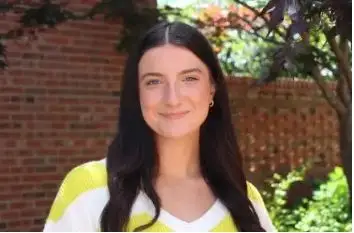
This spring, Trayner took an Advancing Equity course titled “Religion, Race and Resistance,â€� taught by Sheila Otieno. Through courses such as this, Trayner said, “the department has prepared me to take real questions into the world. Dr. Otieno’s course gave me a framework for connecting religious and racial construction to the systems that shape American life, and how I can become a more intentional and thoughtful participant in America’s futurity.â€�
McCarty shares that their understanding of race and religion were shaped by studying Judith Weisenfeld’s “Black Religion in the Madhouse: Race and Psychiatry in Slavery’s Wake” in the religious studies senior seminar, taught by Marcus-Sells, exploring “how racism in America not only shaped psychiatry but also how Black religion is viewed. This perspective of religion as a political force in the world made me more knowledgeable about how the current society we’re in was created.â€�
McCarty found that the department provided an inclusive space for exploring interesting and challenging questions.
“The department has always been welcoming to anyone who has joined,” McCarty said. “I’ve been able to form great connections with those in the department, and they’ve been incredibly open to accepting diverse worldviews.â€�
Carney connected her experience as a religious studies major with the larger institutional objectives found in the Multifaith Strategic Plan.
“The Religious Studies Department at ÂÒÂ×ÊÓƵ actively advances the goals of the multifaith strategic plan. It does so not through a single initiative, but through an ecosystem of mentorship, community engagement, creative coursework and genuine care,” said Carney.
Trayner emphasized the importance of Religious Studies in the current political climate.
“Thanks to this department, I’ll leave ÂÒÂ×ÊÓƵ with a degree in religious studies and a much harder-won inheritance: the habit of holding complexity, the conviction that ordinary people are experts on their own lives, and the trust that careful, plural study of religion is exactly the kind of preparation this fractured moment is asking of us,” said Trayner.
This story is the fourth and final in a series of stories focusing on ÂÒÂ×ÊÓƵ’s Multifaith Strategic Plan.
-
Geoffrey Claussen
Professor of Religious Studies, Lori and Eric Sklut Professor in Jewish Studies and Chair of the Department of Religious Studies
-
Andrew Monteith
Associate Professor of Religious Studies
-
Amy Allocco
Professor of Religious Studies
-
Pamela Winfield
Professor of Religious Studies
-
Brian Pennington
Director of the Center for the Study of Religion, Culture, and Society and Professor of Religious Studies
-
Ariela Marcus-Sells
Associate Professor of Religious Studies
-
Sheila Otieno
Assistant Professor of Religious Studies and Distinguished Emerging Scholar in Religious Studies