


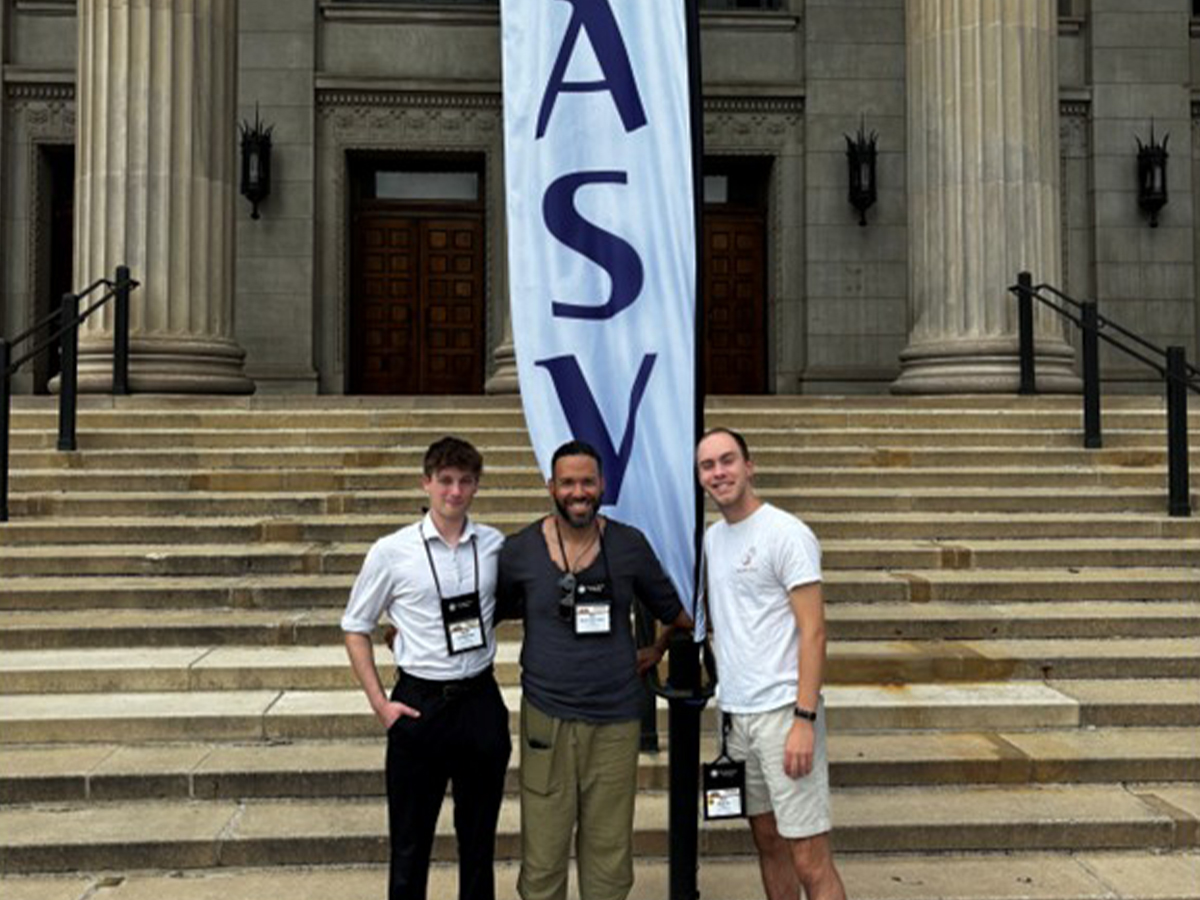
Assistant Professor of Biology EfraÃn Rivera-Serrano and undergraduate researchers Ryder Hutchinson ’28 and Alex Roberts ’27 received travel awards from the American Society for Virology to attend and present their research at the organization’s 2026 annual meeting in Minneapolis, Minnesota.
Assistant Professor of Biology EfraÃn Rivera-Serrano and undergraduate researchers Ryder Hutchinson ’28 and Alex Roberts ’27 received travel awards from the American Society for Virology to attend and present their research at the organization’s 2026 annual meeting in Minneapolis, Minnesota.
Rivera-Serrano, Hutchinson and Roberts represented ÂÒÂ×ÊÓƵ at the 45th annual meeting of the , held July 27–30 at the University of Minnesota–Twin Cities.
Rivera-Serrano received a Teacher of Undergraduates Travel Award, while Hutchinson and Roberts each received Undergraduate Travel Awards. The awards supported their participation in the national meeting, where all three presented posters highlighting research conducted in the Rivera-Serrano Lab.
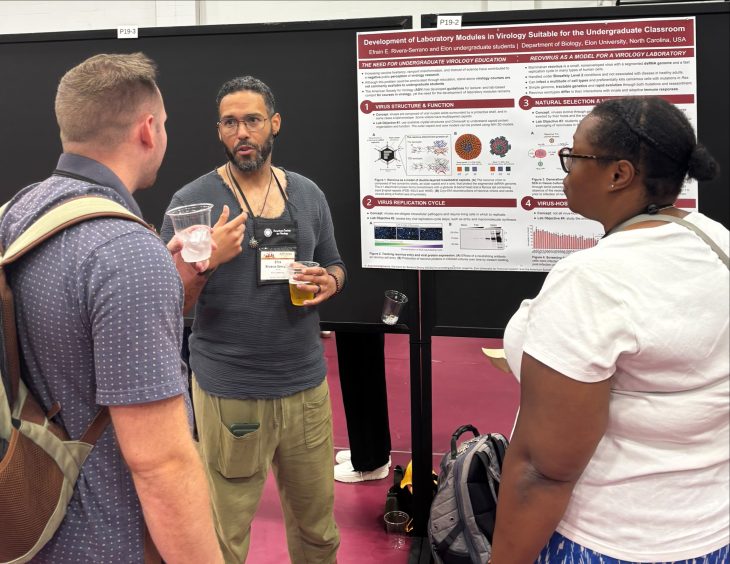
Rivera-Serrano presented “Development of Laboratory Modules in Virology Suitable for the Undergraduate Classroom.� The project focuses on developing accessible laboratory activities that allow undergraduate students to investigate fundamental concepts in virology, including viral infection, replication and interactions with host cells. The modules are designed particularly for institutions where opportunities to incorporate experimental virology into the undergraduate curriculum may be limited.
Hutchinson presented “Reovirus Reassortants Reveal Context-Dependent Oncolytic Phenotypes Across Epithelial Cancer Cell Lines.� His poster highlighted findings from a recently published study examining how genetically diverse reoviruses infect and kill different epithelial cancer cell models. The work demonstrated that the anticancer properties of individual reovirus strains can vary depending on the type of cancer cell being studied, emphasizing the importance of both viral genetics and cellular context when identifying potential cancer-targeting viruses.
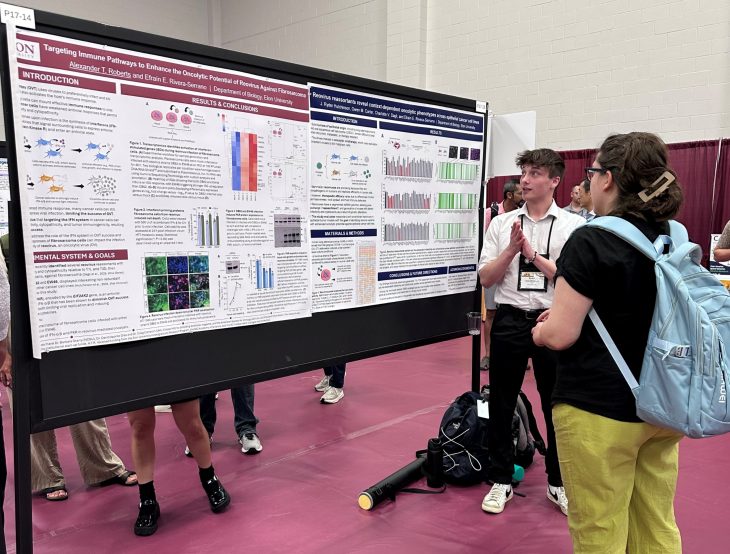
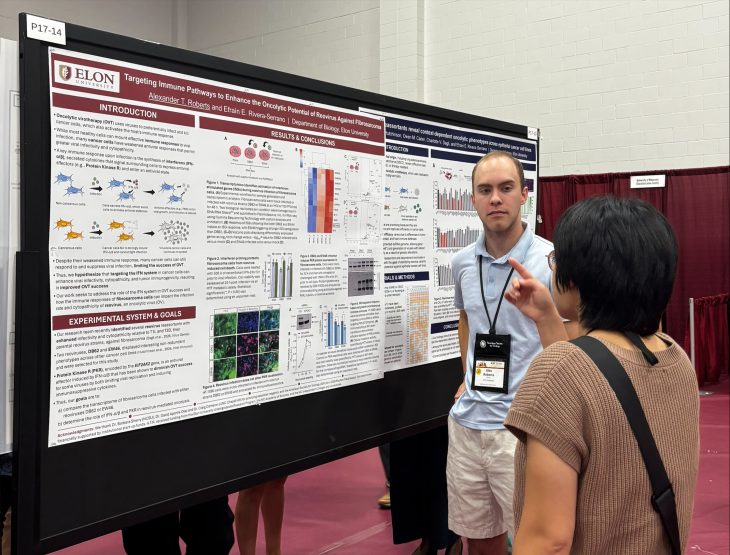
Roberts presented “Targeting Immune Pathways to Enhance the Oncolytic Potential of Reovirus Against Fibrosarcoma Cells.â€� His research explores whether disrupting antiviral immune pathways within fibrosarcoma cells can improve the ability of reovirus to infect and kill the cancer cells. Roberts recently completed ÂÒÂ×ÊÓƵ’s Summer Undergraduate Research Experience under Rivera-Serrano’s mentorship and will continue his research during his senior year. Roberts’ project has received support from the North Carolina Academy of Sciences, North Carolina Independent Colleges & Universities (NCICU) and ÂÒÂ×ÊÓƵ’s Undergraduate Research Program. His recent NCICU Undergraduate Research Award application received the highest rating among the 2026 award recipients in recognition of the project’s scientific merit, feasibility and broader significance.
Participation in the ASV meeting provided Hutchinson and Roberts with opportunities to communicate their research to virologists from across the United States and abroad, receive feedback from experts in the field and learn about current advances in virology. The experience also reflects the Rivera-Serrano Lab’s commitment to involving undergraduate students in collaborative biomedical research and supporting their development as independent scientists.