


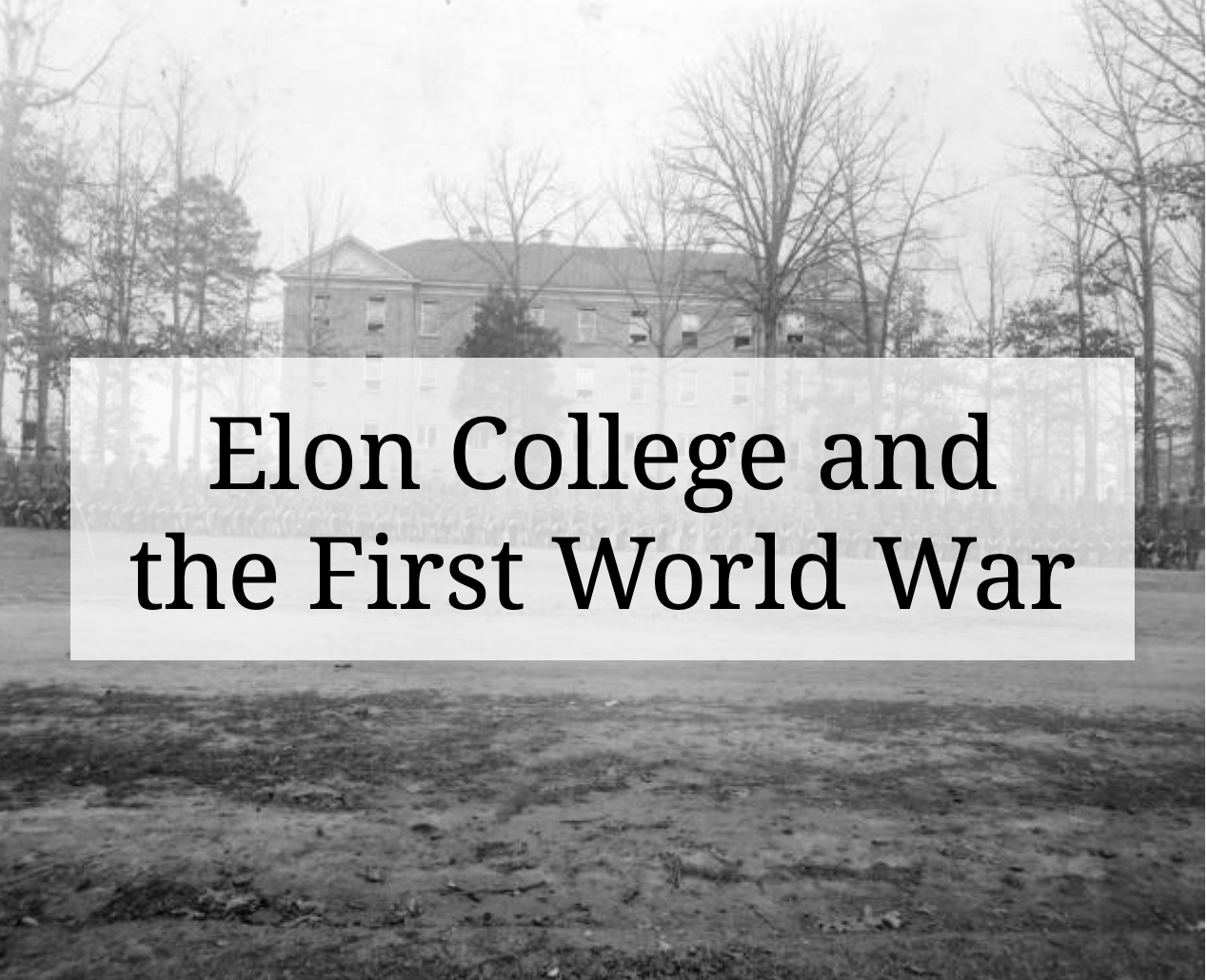
The newest digital exhibit on the Belk Library website includes primary documents, photographs, and first-hand accounts of life at ÂÒÂ×ÊÓƵ College in the early 20th century.
The Archives and Special Collections in Belk Library has created a that offers insight into what life was like at ÂÒÂ×ÊÓƵ College during World War One.
The exhibit was researched and curated by Randall Bowman, archivist and assistant librarian at the Archives and Special Collections Department. Coordinator of University Archives Chrystal Carpenter and Archivist and Assistant Librarian Libby Coyner offered their advice and support.
The exhibit was originally a physical display released in 2018 to to commemorate the 100th anniversary of the armistice that ended the war. It was taken down in 2019 to make room for a different exhibit.
After discovering a new technology, Bowman modified the exhibit into a digital format so it would be able to live on.
“I found a new software called Story Map, and I thought it would be cool to use technology to tell this story,â€� he explained.

Bowman compiled images and other documents from the ÂÒÂ×ÊÓƵ archives. He included newspaper clippings, past honor rolls and student bulletins that highlighted alumni accomplishments.
“We didn’t have a ton of material, but I think the documents we did include really helped tell the story,� said Bowman.
The Story Map also contains recounts from students who attended ÂÒÂ×ÊÓƵ during the war, and a variety of flyers, brochures, and programs that were distributed to members of the community.
An enthusiastic history buff, Bowman has previously written articles about this time period. In March, he published an article regarding ÂÒÂ×ÊÓƵ’s response to the Spanish Influenza, and he included information about the 1918 epidemic in the online exhibit. Since ÂÒÂ×ÊÓƵ College was the first North Carolina college to open in the fall of 1918, it was among the earliest to be struck by the epidemic in September.
The exhibit also contains photos documenting students’ responses to the army unit that was stationed at ÂÒÂ×ÊÓƵ in 1918, which brought further upheaval to the campus.

“One of my favorite parts of the research was reading that the drill sergeants and their profanity were causing a bit of a stir among the students,� Bowman said. “We were still very strongly associated with the church back then, so it was a very different environment than it is today.�
Although the army unit changed the culture of the campus, ÂÒÂ×ÊÓƵ students were still eager to do their part and aid in the war effort.
The Student Army Training Corps (SATC) encouraged young men to attend college and receive military training at the same time. Female students eagerly volunteered for the “soldierettes,� an extension of the SATC that many of the male students were a part of.

The news that the war had ended caused the SATC at ÂÒÂ×ÊÓƵ College to disband in December of 1918, but the presence of the unit had had a strong effect on the campus.
Veterans from the war began to enroll at ÂÒÂ×ÊÓƵ in 1919. Many of the veterans were more mature than the other students, which further changed the culture of the campus.
“You couldn’t treat these soldiers the same as the other students,� said Bowman. “They weren’t just kids out of high school. Most of these men had been in the military.�
As a result, student government was created at ÂÒÂ×ÊÓƵ in an attempt to regulate conduct of students. This also led to the creation of ÂÒÂ×ÊÓƵ’s Honor Code.
Bowman emphasized the importance of studying ÂÒÂ×ÊÓƵ’s history, and the connections that the wartime holds with the present day. Although the war was only a small part of ÂÒÂ×ÊÓƵ’s history, it left an important impact.
“I found a lot of similarities between the war and now, with how we’re handling the pandemic,â€� said Bowman. “We were resilient then and we’re resilient now. ÂÒÂ×ÊÓƵ does what it has to in the face of a crisis.â€�